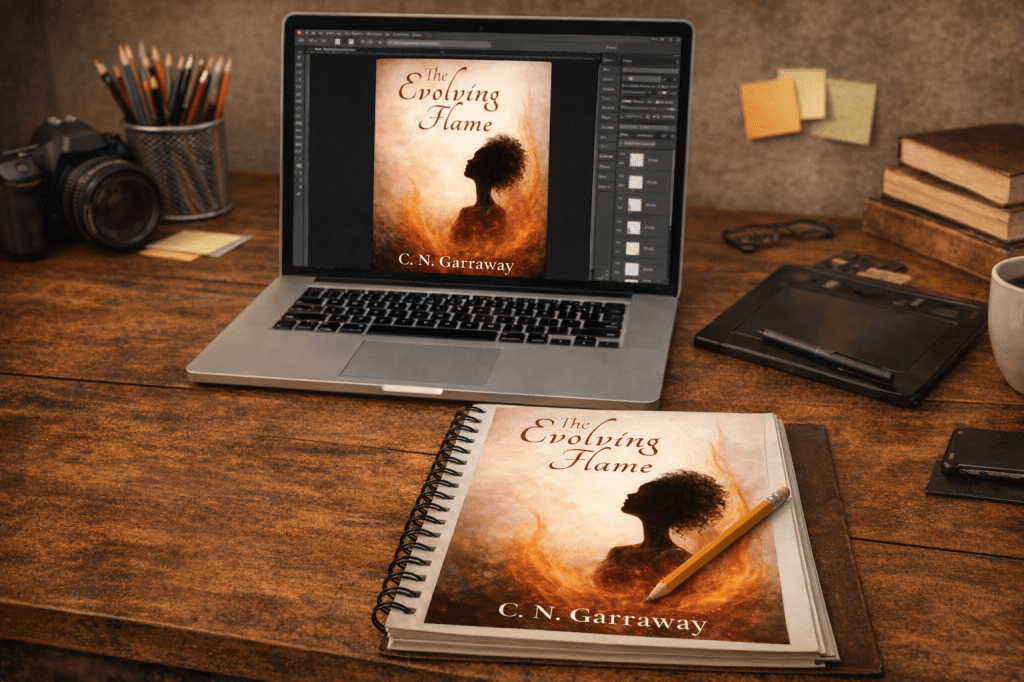
Do you want to design your own book cover, but keep hearing that you shouldn’t?
Many articles strongly push authors to hire professional cover designers. Others say you can do it yourself. I am not here to pressure you into hiring a professional. Chances are, you have found this article because you cannot afford one right now and need someone to tell you that designing your own cover is possible.
You can design your own book cover—and I will help guide you through the process.
Do You Really Need a Professional Designer?
Some people argue that professionally designed covers always look better. But is that always true?
In all the books I have ever read, I have never thought, “This author must have designed this cover.” Most readers judge a cover by whether it catches their attention.
The reality is that many writers can’t afford a professional cover designer. I know that I can’t, and I probably won’t be able to for a long time. That doesn’t mean authors should feel discouraged from creating something themselves.
My Design Background
Fortunately, I do have a design background. It is not specifically in book design, but I earned a Bachelor of Science in IT/Web Development. While I never pursued that career professionally, I have designed multiple websites and created flyers and logos.
Understanding basic design principles can be transferred across different types of design. I do have experience that helps me approach book cover creation.
Software You Can Use
If you are patient and enjoy learning new skills, you can absolutely learn how to design your own book cover.
Popular Design Tools
- Adobe Illustrator
- Photoshop
- Adobe Express
- Canva
- AI design programs
If you are against using AI to help create your cover, that is completely fine. I am simply mentioning it as an option.
However, if you do use AI-generated images, remember that you must disclose this when publishing on Amazon KDP.
Personally, I use Adobe Illustrator. I have been using it for more than 15 years and do all my design work there. I have created journal covers and designed the cover for my poetry book.
When I first created my poetry cover, I liked it. I have redesigned it because I believed I could do better—and that is part of the creative process.
Study Book Covers in Your Genre
If you want to design your own book cover, research is essential.
Look at books in your genre as well as books you personally enjoy. Ask yourself:
- What made the cover stand out?
- Was it the color palette?
- The typography?
- The image?
- The arrangement of the title?
Book covers attract readers for specific reasons. Understanding those reasons can help you design something effective.
Where to Find Images
If your cover includes images, here are some places to find them:
- Pixabay
- Unsplash
- Adobe Stock
- Shutterstock
- Vecteezy (free and paid options)
Whenever possible, it is usually better to buy a stock photo instead of relying on a free one. Free images are widely available, which means many authors might use the same image.
I witnessed this myself. My cousin used a stock design for his book cover, and later, I saw another book on Amazon with the same design. Unfortunately, that can make a book feel less unique and may affect how readers perceive it.
Use Pinterest for Inspiration
Pinterest is a fantastic resource for design inspiration. I use it often.
You can create an inspiration board and save covers, color palettes, typography, and design ideas that appeal to you. Having everything in one place allows you to revisit the ideas that resonate most.
Sketch Your Ideas First
Once you gather inspiration, start sketching your ideas.
Do not worry about making the sketch perfect. This stage is simply about getting your ideas onto paper and experimenting with different concepts.
Sketching helps you visualize how the elements of your cover might come together.
Don’t Be Discouraged
Many articles seem to discourage authors from designing their own book covers. While I understand that professional designers need clients, those articles sometimes forget an important reality: many authors cannot afford a professional designer.
Your cover doesn’t have to be permanent. Many authors redesign their covers later in their careers. Some do it when their book gains popularity, or when it is adapted into a film.
Authors like Stephen King and Dean Koontz have had their covers redesigned multiple times. A new cover can refresh a book and attract new readers.
Maintain Consistency for a Series
If you are creating a series, consistency is important. Each book should visually connect to the others through elements such as:
- Typography
- Color palette
- Layout
- Title styling
This creates recognizable branding for your series.
Experiment With Layouts
When designing your cover, try several layouts before deciding on the final version. Sometimes, small adjustments in placement or spacing can dramatically improve the design.
Mockups are an excellent way to experiment with different possibilities.
Using Your Existing Talents
If you can draw, you likely already have a strong visual sense. Artistic skills can translate well into cover design.
Use the talents you already have.
My Cover Design Process (Before & After)
For my poetry book, I first sketched an idea for the cover. I then experimented with ChatGPT to help generate an image that resembled what I envisioned.
Once I had something close to my concept, I brought the image into Adobe Illustrator and began building the cover. I created several mockups until the cover for The Evolving Flame emerged.
I am officially satisfied with the current design. Below are the previous cover and two mockups.
My First Cover Attempt
This was my first attempt at designing my own cover. It has evolved since then. I am sharing this so you can see that your first design doesn’t have to be perfect.

I knew I wanted flames in my design somewhere. I liked the dark background because I thought it matched the mood of some of my poems; however, it didn’t capture the overall tone of the book.
Mockup 1 – What Didn’t Work

I experimented with fuller flames and a blended contrast, but the flames were too overpowering. There wasn’t enough white space to balance the design. Also, the blurb didn’t match the emotional tone of the book.
Final Cover – What Changed and Why
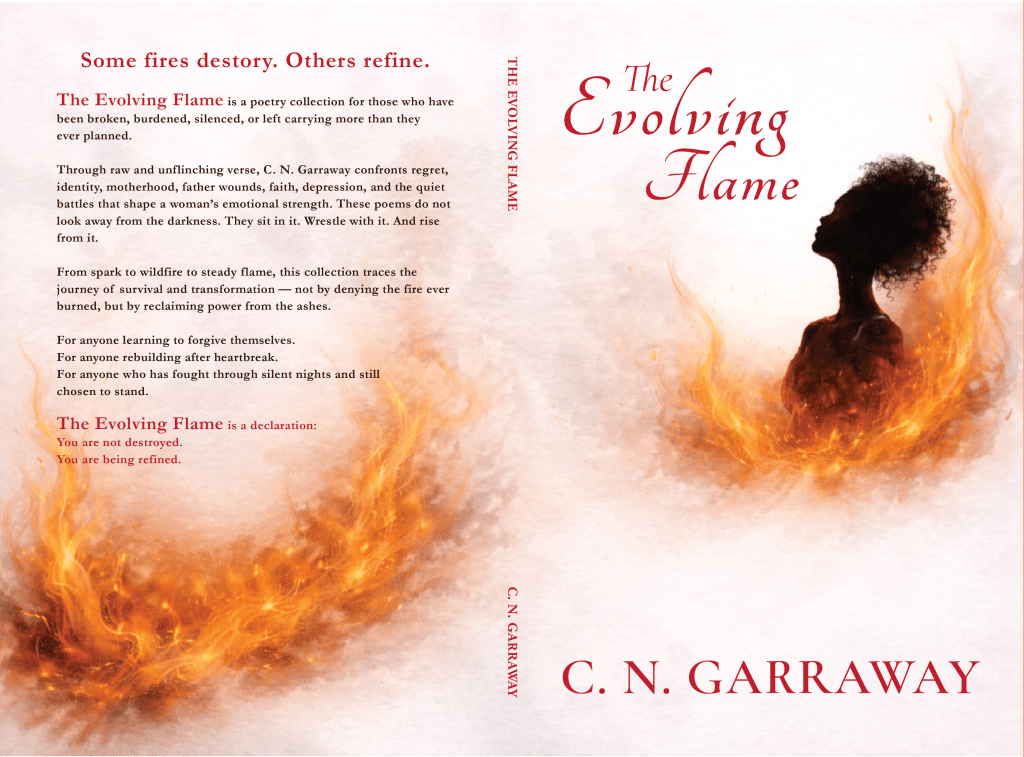
This version matches the overall theme. By limiting the flames and changing the title and author name to red, it made the design pop. It allows the cover to breathe. On the back cover, I rewrote the blurb and added red to highlight certain parts to add contrast with the background.
Your first design will not be perfect. It’s important to allow yourself to experiment and evolve. Have fun. It will make the experience enjoyable.
Final Thoughts
If you are considering designing your own book cover, remember that research, patience, and experimentation are key.
Study other authors’ covers and ask yourself why they attracted your attention. Was it the colors? The imagery? The typography?
Understanding what draws readers to a book can help guide your own design choices.
In the end, the most important thing is to create a cover that represents your book and your voice.
Join the Conversation
Are you designing your own cover? Please, share what you’ve created in the comments.
 C. N. Garraway
Leave a comment